
- Details
- Written by: Benedicto Abo
- Read Time: 1 min
- Hits: 105
Learn to navigate Google Classroom and complete assignments. This tutorial shows how to access classes, view assignments, and submit work. Explore the Stream, Classwork, and Calendar features for optimal organization.
What You’ll Learn
- How to access your class dashboard (Stream & Classwork)
- How to view class assignments and details
- How to submit assignments through Google Classroom
- How to use the Calendar and organize tasks
- How to stay on top of class updates and announcements
- Details
- Written by: Benedicto Abo
- Read Time: 4 mins
- Hits: 81
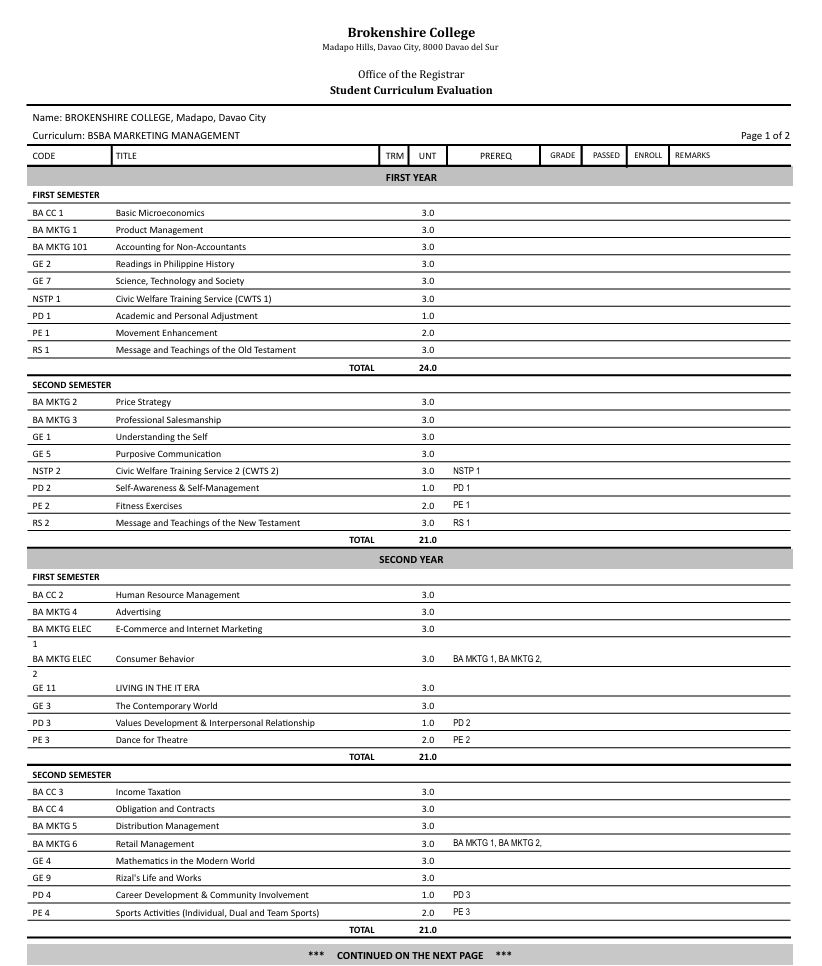
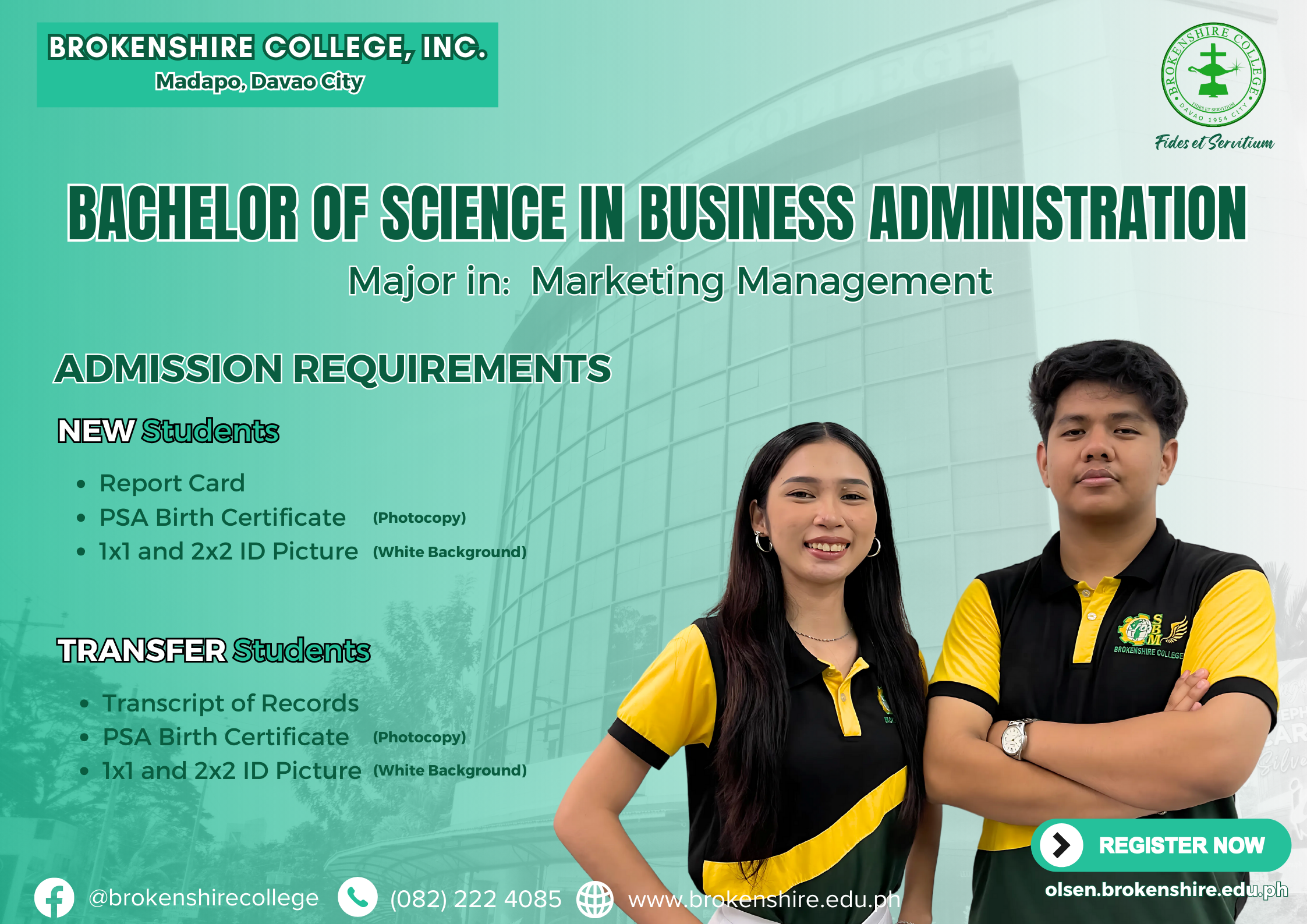
The Marketing Management program prepares the graduate for careers in marketing, market research, advertising and public relations. The curriculum provides the graduate with both technical skills and competencies required in the field, but also the flexible mindset that is necessary to stay competitive in a constantly changing business environment.
Vision
The BC Business Administration Department envisions innovative and competitive marketing leaders with high entrepreneurial traits equipped with knowledge, skills, and attitudes needed in the local, national, and global marketing landscape.
Mission
The BC Business Administration Department is dedicated to shaping future marketing leaders by nurturing innovation in products and services, enhancing entrepreneurial and managerial skills, advancing research and development, and fostering adaptability to evolving local and global marketing landscapes.
Goals
After earning a Bachelor’s degree in Brokenshire College, graduates will be able to:
- Develop innovative and entrepreneurial marketing professionals
- Strengthen managerial and leadership competencies for the global marketing landscape
- Advance research competence and analytical skills for evidence-based marketing decisions
- Foster adaptability, ethical responsibility, and professional values
Program Educational Objectives (PEO)
After 3 to 5 years, the graduates of BSBA shall be able to:
PEO1 Exhibit comprehensive knowledge and skills in business, management, and entrepreneurship for effective organizational performance.
PEO2 Perform leadership and decision-making functions that foster innovation, productivity, and ethical business practices.
PEO3 Participate in lifelong learning, research, and professional development to adapt to dynamic business environments.
PEO4 Apply ethical principles, social responsibility, and cultural awareness in business decisions to promote sustainable growth.
Program Learning Outcomes (PLO)
Upon graduation, the students of BSBA shall be able to:
PLO1 Articulate and discuss the latest developments in the specific field of practice.
PLO2 Effectively communicate orally and in writing using both English and Filipino.
PLO3 Work effectively and independently in multi-disciplinary and multi-cultural teams.
PLO4 Act in recognition of professional, social, and ethical responsibility.
PLO5 Preserve and promote “Filipino historical and cultural heritage” (based on RA 7722).
PLO6 Perform the basic functions of management such as planning, organizing, staffing, directing and controlling.
PLO7 Apply the basic concepts that underline each of the functional areas of business (marketing, finance, human resources management, production and operations management) and employ the concepts in various business situations.
PLO8 Select the proper decision-making tools to critically, analytically and creatively solve problems and drive results.
PLO9 Express oneself clearly and communicate effectively with stakeholders both in oral and written forms.
PLO10 Apply information and communication technology (ICT) skills as required by the business environment.
PLO11 Work effectively with other stakeholders and manage conflict in the workplace.
PLO12 Plan and implement business related activities.
PLO13 Demonstrate corporate citizenship and social responsibility.
PLO14 Exercise high personal moral and ethical standards.
PLO15 Analyze the business environment for strategic direction.
PLO16 Prepare operational plans.
PLO17 Innovate business ideas based on emerging industry.
PLO18 Manage a strategic business unit for economic sustainability.
PLO19 Conduct business research.
Program Structure
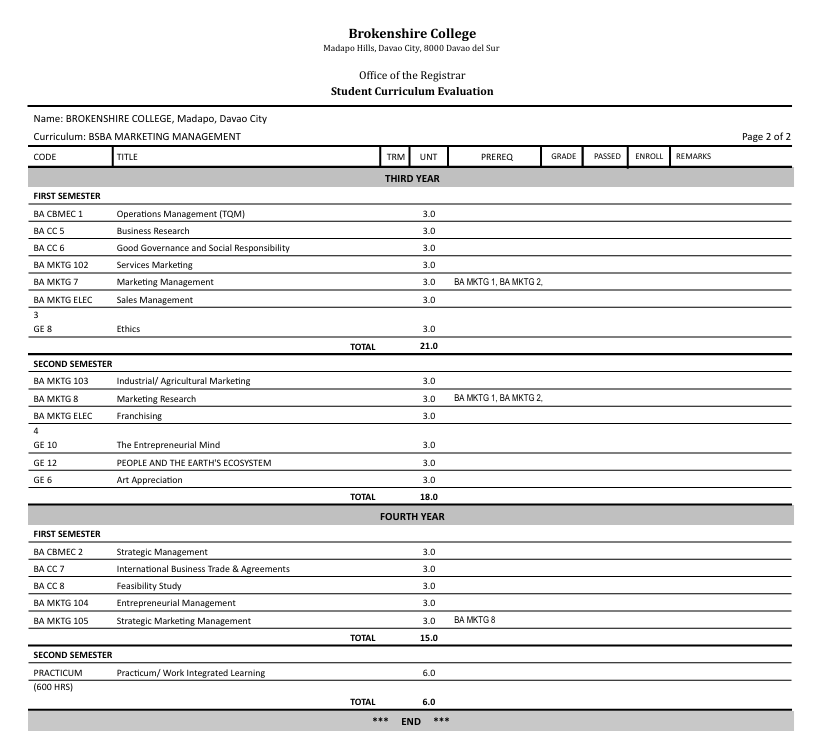
Total Credit Units: 147 units
General Education Courses: 36 Units
Core Business and Management Education Courses: 6 units
Business Administration Core Courses: 24 units
Professional Major Courses: 24 units
Electives Courses: 12 units
Mandated Courses: 14 units
Institutional Courses: 25 units
Internship: 6 units
Careers
A BSBA degree opens doors to meaningful and high-impact careers by building strong foundations in management, strategy, and communication. Graduates can succeed as Product Managers at MASA Warehouse, where they handle product selection, monitor inventory, and ensure customer needs are met while supporting the warehouse’s overall sales goals. They can also thrive as Project Managers in the Transition Business Group, leading important business changes, planning and organizing projects, guiding teams, and ensuring smooth and successful transitions. These roles highlight how BSBA graduates can make a real difference in helping businesses grow, improve, and deliver better services.
1. Marketing Associate / Marketing Officer
Assist in market research, promotions, branding, and campaign execution.
2. Sales Representative / Account Executive
Handle client accounts, generate leads, and meet sales targets.
3. Product Manager
Oversee product planning, development, pricing, and overall strategy in companies like MASA Warehouse.
4. Project Manager
Lead, coordinate, and monitor projects in organizations such as Transition Business Group.
5. Business Development Officer
Identify business opportunities, partnerships, and expansion strategies.
6. Entrepreneur / Small Business Owner
Start and manage your own business using marketing and management skills.
7. Human Resource Assistant / HR Staff
Support recruitment, training, employee relations, and HR operations.
8. Financial Analyst / Finance Assistant
Assist in budgeting, forecasting, financial reporting, and cost analysis.
9. Operations Supervisor / Operations Staff
Manage day-to-day business operations, workflow, and productivity.
10. Customer Service Supervisor / Specialist
Handle customer concerns, retention programs, and service quality improvements.
11. Brand Assistant / Brand Specialist
Work on brand positioning, promotions, and customer engagement strategies.
12. Administrative Officer / Office Manager
Coordinate office systems, documentation, and administrative processes.
13. Logistics & Supply Chain Staff
Monitor inventory, warehouse operations, procurement, and distribution.
14. E-commerce Specialist
Manage online stores, digital marketing, product listings, and online sales.
15. Research Analyst / Market Researcher
Conduct surveys, analyze data, and generate insights for business decisions.
Accreditation
ACSCU-ACI - Level III
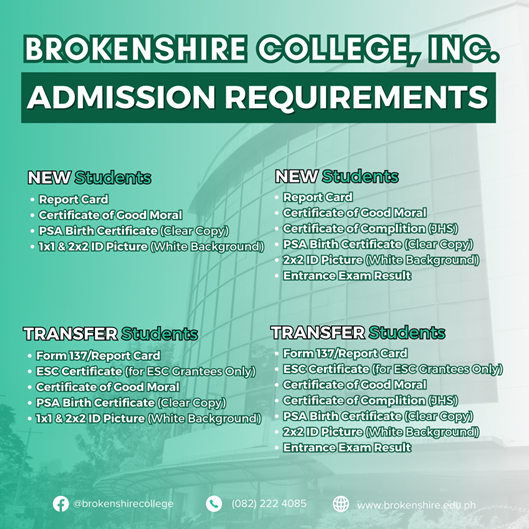
Admission Requirement
Curriculum
This course provides an overview of the scientific study of behavior and mental processes. It covers the historical foundations, major perspectives, methods of research, and key areas in psychology such as biological bases of behavior, development, learning, cognition, motivation, personality, social psychology, and psychological disorders. Emphasis is placed on applying psychological concepts to real-life situations while fostering ethical awareness and cultural sensitivity.
This consists of 3 hours per week of online and face to face learning, including synchronous and asynchronous activities and assessments. Classes meet twice a week, with the first session conducted synchronously and the second session asynchronously. Students are expected to actively participate in synchronous discussions and complete assigned assessment tasks, projects, or other course requirements during the asynchronous session. Course materials are available in Google Classroom, allowing students to review topics at their own pace. Examinations will be conducted face-to-face.
Vision
To be a leading psychology program in Mindanao, producing competent, ethical, and service-oriented graduates who promote mental health and community development.
Mission
The Psychology Program is committed to quality education, research, and community service that integrate Christian values, ethical practice, and scientific knowledge in addressing individual and societal needs.
Goals
After earning a Bachelor’s degree in Brokenshire College, graduates will be able to:
- Provide strong academic and practical training in psychology.
- Uphold ethical, professional, and culturally responsive practice.
- Promote research and innovation for mental health and well-being.
- Foster social responsibility, compassion, and lifelong learning.
Program Educational Objectives (PEO)
Upon completion of the course, the students will be able to:
PEO1 Define and explain the basic concepts, history, and major perspectives in psychology.
PEO2 Identify and describe the biological, cognitive, and socio-cultural bases of behavior.
PEO3 Apply psychological principles in understanding human development, learning, and behavior.
PEO4 Demonstrate awareness of ethical issues, cultural sensitivity, and applications of psychology in everyday life.
Program Learning Outcomes (PLO)
Upon completion of the lesson, the students will be able to:
PLO1 Demonstrate comprehensive knowledge of major theories, concepts, and empirical findings in psychology and their applications across settings.
PLO2 Apply scientific reasoning, psychological assessment, and research-based approaches in solving human behavior problems.
PLO3 Uphold ethical standards, confidentiality, integrity, respect for human dignity, and Christian values in all academic and professional engagements.
PLO4 Design, conduct, analyze, and disseminate psychological research using quantitative, qualitative, and mixed-methods approaches.
PLO5 Communicates psychological concepts clearly through oral, written, digital, and interpersonal forms appropriate for various audiences.
PLO6 Demonstrate leadership, civic engagement, cultural sensitivity, and service-oriented mindset in community and organizational settings.
PLO7 Engage in self-reflection, continuous learning, professional development, and preparation for evolving careers in psychology.
Program Structure:
Total Credit Units:154 units
General Education courses: 36 units
Psychology core & Major Courses: 63 units
Specialized Electives: 18 units
Natural Science Electives: 20 units
PE, NSTP, PD courses: 17 units
Careers
A BS Psychology degree opens pathways to meaningful and people-centered careers by building a strong foundation in human behavior, mental processes, communication, and research. Graduates can excel as Human Resource Specialists in companies like MASA Warehouse, where they assist in recruitment, employee assessment, training, and workplace wellness to help create a positive and productive environment. They can also thrive as Guidance Staff or Mental Health Support Officers in educational and organizational settings, supporting individuals through counseling assistance, psychological first aid, and developmental programs. With roles such as Psychometricians in testing centers or HR departments, BS Psychology graduates help administer and interpret assessments that guide hiring decisions, career planning, and personal development. These career paths highlight how Psychology graduates play an essential role in understanding people, improving well-being, and strengthening organizations and communities.
Accreditation
Level 3 ACSCU-ACI
Admission Requirement
Curriculum
The Bachelor in Secondary Education (BSEd) majoring in English is a program at the undergraduate level that aims to train upcoming educators to teach English language and literature subjects in secondary schools. The program emphasizes both theoretical understanding and practical abilities, preparing students to create teaching approaches that cater to a variety of learners. Students receive instruction in linguistics, literary analysis, language teaching strategies, assessment techniques, and classroom management. They are being introduced to current educational practices, like utilizing technology, providing individualized instruction, and promoting inclusivity. The program improves students' communication skills, critical thinking, and problem-solving capabilities as well. The program offers abundant teaching practicum or internship opportunities, enabling aspiring educators to acquire practical experience in classroom environments. Graduates will be prepared to provide interesting, diverse, and organized English classes, aiding in the academic achievement of their students.
Vision
The Teacher Education program is a leading provider of teachers with eclectic teaching expertise for diverse local and global needs.
Mission
The Teacher Education Program as the foundation of pedagogical knowledge is committed produce globally competitive graduates imbued with moral and spiritual values who can respond to the changing needs of the time
Goals
The Bachelor of Secondary Education major in English program aims to develop competent, innovative, and values-driven secondary school English teachers who are equipped with the knowledge, skills, and professional dispositions necessary to foster effective communication, critical thinking, cultural awareness, and lifelong learning among diverse learners.
Demonstrate professional competence and ethical responsibility by mastering subject matter, staying updated with field developments, and upholding service orientation and cultural values.
Communicate and collaborate effectively in both English and Filipino, working independently or with diverse, multi-disciplinary, and multi-cultural teams.
Innovate and facilitate meaningful learning by designing effective curricula, using varied teaching methodologies, and grounding education in philosophical, socio-cultural, historical, and psychological contexts
Program Educational Objectives (PEO)
The BSEd program aims to produce secondary teachers who have the ability to:
PEO1 Show a broad and current understanding of different subjects in the secondary education curriculum by participating in scholarly research activities and making the most of opportunities for continuous learning throughout life.
PEO2 Offer valuable learning experiences to secondary students by integrating innovative educational technologies for effective and high-quality teaching, while fostering an environment that promotes positive social interactions, active participation, and self-motivation.
PEO3 Exhibit proficiency in teaching and assessment by designing, adapting, and utilizing teaching strategies, instructional resources, and evaluation tools that align with the cognitive, emotional, and physical development of secondary students.
PEO4 Adhere to the professional code of ethics for teachers and embrace the significance of ongoing professional growth, while fostering collaborative and harmonious relationships with all members of the academic community.
PEO5 Build lasting partnerships and connections with the professional community, offering support to underserved, disadvantaged, illiterate, and less skilled individuals through outreach programs and community service initiatives.
Program Learning Outcomes (PLO)
Graduates of the BSEd English program are expected to:
PLO1 Demonstrate advanced competence in oral and written English for effective communication in diverse academic and social contexts.
PLO2 Apply in-depth knowledge of English language systems (linguistics, literature, communication, and writing) and their interrelationships to teach secondary school learners.
PLO3 Design, implement, and evaluate effective, learner-centered instructional plans that promote critical thinking, creativity, and communication skills.
PLO4 Develop and adapt English curricula and learning resources aligned with national and global standards to meet the needs of diverse learners.
PLO5 Select, develop, and utilize appropriate assessment tools and strategies to measure and support student learning in English.
PLO6 Incorporate ICT and emerging technologies to enhance the teaching and learning of English.
PLO7 Conduct action research and apply innovative strategies to improve English teaching practices and student outcomes.
PLO8 Uphold professional standards and ethical principles in all teaching and learning contexts, serving as a role model for students and peers.
PLO9 Engage in continuous professional development, reflective practice, and scholarly pursuits to remain responsive to the evolving needs of English language education.
PLO10 Build partnerships with stakeholders and participate in outreach programs to promote literacy and language development in the community.
Program Structure
Total Credit Units: 174 units
General Education Courses: 36 units
Professional Education Courses: 42 units
Major Courses: 66 units
Elective: 6 units
Mandated Courses (PATHFit, NSTP): 14 units
Institutional Courses: 10 units
Accreditation
ACSCU-ACI - Level III
Careers
The Bachelor in Secondary Education Major in English program prepares graduates for various roles in education, especially at the secondary level. They can work as English teachers, curriculum specialists, content developers, authors, tutors, researchers, consultants, material designers, school directors, and trainers. Graduates guide students in language and literature, improve communication skills, and deliver engaging lessons for diverse learners. Those interested in writing and publishing can create educational materials and offer personalized instruction. Through educational research, graduates explore teaching trends and student behaviors, shaping future practices and policies. They can also serve as consultants, overseeing educational institutions. As trainers, they provide professional development for teachers, enhancing their skills and use of technology to contribute to the educational community and society.
Admission Requirement
The Bachelor in Elementary Education (BEEd) is an undergraduate program designed to prepare future educators to teach a wide range of subjects in elementary schools. The program emphasizes both theoretical knowledge and practical skills, equipping students with teaching approaches that address the needs of diverse learners. Students are trained in pedagogy, educational psychology, curriculum development, assessment techniques, and classroom management. They are introduced to modern educational practices, including the use of technology, differentiated instruction, and inclusive education. The program also enhances students' communication, critical thinking, and problem-solving skills. Extensive teaching practicum or internship opportunities allow aspiring teachers to gain valuable hands-on experience in real classroom settings. Graduates of the BEEd program are well-prepared to design engaging, varied, and well-structured lessons that foster academic success in young learners.
Vision
The Teacher Education program is a leading provider of teachers with eclectic teaching expertise for diverse local and global needs.
Mission
The Teacher Education Program as the foundation of pedagogical knowledge is committed to produce globally competitive graduates imbued with moral and spiritual values who can respond to the changing needs of the time.
Goals
The Bachelor of Elementary Education (BEEd) program aims to develop competent, ethical, and innovative educators who are equipped with the knowledge, skills, and values necessary to facilitate meaningful learning experiences, contribute to nation-building, and continuously grow as professionals in the field of education.
Demonstrate professional competence and ethical responsibility by mastering subject matter, staying updated with field developments, and upholding service orientation and cultural values.
Communicate and collaborate effectively in both English and Filipino, working independently or with diverse, multi-disciplinary, and multi-cultural teams.
Innovate and facilitate meaningful learning by designing effective curricula, using varied teaching methodologies, and grounding education in philosophical, socio-cultural, historical, and psychological contexts.
Program Educational Objectives (PEO)
The BEEd program aims to produce elementary teachers who have the ability to:
PEO1 Demonstrate a broad and up-to-date understanding of the subjects taught in the elementary education curriculum by engaging in scholarly research activities and taking advantage of opportunities for lifelong learning.
PEO2 Provide meaningful learning experiences to elementary students by incorporating innovative educational technologies for effective and high-quality teaching, while promoting positive social interactions, active engagement, and self-motivation.
PEO3 Display proficiency in teaching and assessment by designing, adapting, and applying teaching strategies, instructional resources, and evaluation tools that align with the cognitive, emotional, and physical development of elementary students.
PEO4 Uphold the professional code of ethics for teachers and embrace the value of continuous professional growth, while fostering collaborative and positive relationships with all members of the school community.
PEO5 Establish meaningful partnerships and connections with the broader community, offering support to underserved, disadvantaged, and less skilled individuals through outreach programs and community service efforts.
Program Learning Outcomes (PLO)
Graduates of the BEEd program are expected to:
PLO1 Demonstrate comprehensive understanding of the concepts, principles, and subject matter across the elementary curriculum.
PLO2 Design, implement, and assess developmentally appropriate, learner-centered, and innovative teaching-learning processes.
PLO3 Apply principles of curriculum development in planning, organizing, and evaluating instructional programs aligned with national standards.
PLO4 Develop, select, and utilize appropriate assessment tools to measure and support student learning outcomes.
PLO5 Create safe, inclusive, and engaging learning environments that support diverse learners’ holistic growth and well-being
PLO6 Integrate appropriate digital tools and educational technologies to enhance teaching effectiveness and student engagement.
PLO7 Exhibit the values, attitudes, and ethical standards expected of professional educators, guided by the Code of Ethics for Professional Teachers.
PLO8 Pursue continuous professional development through research, training, and reflective practice to remain responsive to the evolving demands of education.
PLO9 Work collaboratively with colleagues, families, and communities to promote inclusive and equitable education for all learners.
PLO10 Conduct action research and implement innovative strategies to improve classroom practices and learning outcomes.
Acceditation
ACSCU-ACI - Level III
Program Structure
Total Credit Units: 165 units
General Education Courses: 36 units
Professional Education Courses: 42 units
Major Courses: 57 units
Elective: 3 units
Mandated Courses (PATHFit, NSTP): 14 units
Institutional Courses: 13 units
Careers
The Bachelor in Elementary Education Major in English program prepares graduates for various roles in education, especially at the secondary level. They can work as English teachers, curriculum specialists, content developers, authors, tutors, researchers, consultants, material designers, school directors, and trainers. Graduates guide students in language and literature, improve communication skills, and deliver engaging lessons for diverse learners. Those interested in writing and publishing can create educational materials and offer personalized instruction. Through educational research, graduates explore teaching trends and student behaviors, shaping future practices and policies. They can also serve as consultants, overseeing educational institutions. As trainers, they provide professional development for teachers, enhancing their skills and use of technology to contribute to the educational community and society.